
Your First 30 Days in Luxembourg: The Complete Checklist

A step-by-step checklist of everything to do during your first month in Luxembourg: declaring your arrival, social security, banking, transport and health cover.
Comprehensive Guide to First Administrative Steps and Legal Deadlines for Newcomers
The Grand Duchy of Luxembourg is an attractive destination to live and work, but your first few weeks after arrival are crucial. Certain administrative procedures have short legal deadlines, while others are essential for accessing housing, healthcare, and employment. Here is the logical order and precise timeline to follow for a smooth integration into your new country.First Week: Top Priority (Arrival Declaration)
This is the very first administrative step you should undertake immediately upon arrival.
1. Declaring Arrival at the Commune (Déclaration d'arrivée)
Everyone, regardless of nationality, settling in Luxembourg must present themselves in person to the Population Office (Bureau de population) of their municipality of residence to declare their arrival.
Legal Deadline: 3 working days only from your arrival date. This deadline applies to everyone (EU and non-EU citizens alike).- Required Documents: Passport or ID card, lease agreement or proof of accommodation, and civil status documents if applicable (e.g., marriage certificate, birth certificates of children, translated and authenticated).

Luxembourg City Hall, where your first administrative steps begin.
Essential Steps During the First Month and Beyond
After completing your arrival declaration, focus on these core procedures:
2. Social Security Registration (CCSS) and Employment
- Step: Once your employment contract is signed, ensure your employer has registered you with the Joint Social Security Centre (Centre Commun de la Sécurité Sociale - CCSS).
- Result: You will receive a 13-digit National Identification Number, which is essential for all transactions in Luxembourg.
3. Health Insurance (CNS) and Choosing a Doctor
- After CCSS registration, wait to receive your social security/health insurance card from the CNS (Caisse Nationale de Santé).
- It is recommended to choose a primary care physician (Médecin traitant) for regular healthcare.
4. Opening a Local Bank Account
- You will need a bank account in Luxembourg to receive your salary and pay bills.
- Ensure the account provides a local IBAN starting with "LU".
5. Arranging Additional Residency Documents (by Nationality)
- For EU Citizens: You must apply for a Registration Certificate (Attestation d'enregistrement) at the municipality within 3 months of arrival.
- For Non-EU Citizens (Third-country nationals): You must submit an application for a Residence Permit (Titre de séjour) to the Directorate General of Immigration within 3 months.
6. School Registration for Children
Children of compulsory school age must be registered at the local municipality, which will guide you to the appropriate local school.
7. Recommended Insurance Policies
It is strongly advised to take out Civil Liability Insurance (Assurance Responsabilité Civile - RC) and Home Insurance (Assurance Habitation).
Transport: Free and World-Leading
Great news for all residents and visitors! Since March 1, 2020, Luxembourg became the first country in the world to offer completely free nationwide public transport.
- What is included? All buses, CFL trains (within Luxembourg in 2nd class), and the modern tram network.
- How does it work? No tickets or subscriptions are required for 2nd-class domestic travel. Tickets are only required for international train travel or 1st-class domestic train travel.
- Planning: Check schedules and routes via the mobiliteit.lu website or mobile app.

Free public transport network in Luxembourg, a modern and seamless travel experience.
Driving Licence: When Should You Exchange It?
Be mindful of your driving licence requirements, as rules vary depending on where it was issued:
1. Licences Issued by EU / EEA Countries
- Exchange: Not mandatory. Your current licence remains valid until its official expiration date.
- Registration: Registering your licence (optionally) with the SNCA is recommended to facilitate obtaining a replacement if lost or stolen.
2. Licences Issued Outside the EU (Third Countries)
- Exchange: Mandatory. You must exchange your foreign driving licence for a Luxembourgish one with the Société Nationale de Circulation Automobile (SNCA) within 1 year (12 months) of registering your residence.
- Note: After the first year, your foreign licence will no longer be legally valid for driving in Luxembourg without undergoing additional tests.
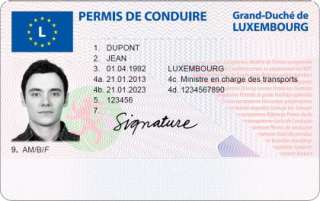
Exchanging your foreign driving licence within one year ensures you can legally continue driving in Luxembourg.
Summary of Deadlines and Authorities
| Procedure | Legal Deadline | Competent Authority |
|---|---|---|
| Arrival Declaration (Déclaration d'arrivée) | 3 working days (for all) | Municipal Population Office (Bureau de population) |
| Social Security Registration | Within 8 days of starting work | Joint Social Security Centre (CCSS) |
| Driving Licence Exchange (non-EU) | Within 12 months of residency | National Automotive Circulation Company (SNCA) |
| Registration Certificate (EU citizens) | Within 3 months of arrival | Local Municipality (Commune) |
| Residence Permit (non-EU citizens) | Within 3 months of arrival | Directorate General of Immigration |
Final Tips and Official Sources
- MyGuichet.lu: Create an account on this national portal right away. Using an electronic identity product (LuxTrust or eID), you can complete and track most administrative steps online.
- Documents: Always keep both digital and physical copies of every document you submit or receive.
Official Sources:
- Guichet.lu: The main administrative portal of Luxembourg.
- CNS.lu: National Health Fund.
- CCSS.lu: Joint Social Security Centre.
- SNCA.lu: National Automotive Circulation Company (driving licences).
- Mobiliteit.lu: Public transport information and route planner.